Fundamentals
What is equine podiatry?
Equine podiatry is the discipline devoted to the study, care and treatment of the horse's hoof, taking into account its anatomy, biomechanics, morphology and role within the locomotor system. The aim is to maintain or restore balance and function so that the horse can move as comfortably, stably and efficiently as possible.
The hoof is a complex, dynamic structure that bears much of the load generated during movement. Its shape, growth, balance and shock absorption are closely linked to the internal structures of the foot and to the rest of the horse's musculoskeletal system.
For this reason, equine podiatry is not simply about trimming the hoof or fitting a shoe. It requires understanding how the wall, sole, frog, internal structures and the forces acting on the foot interact during weight bearing and movement.
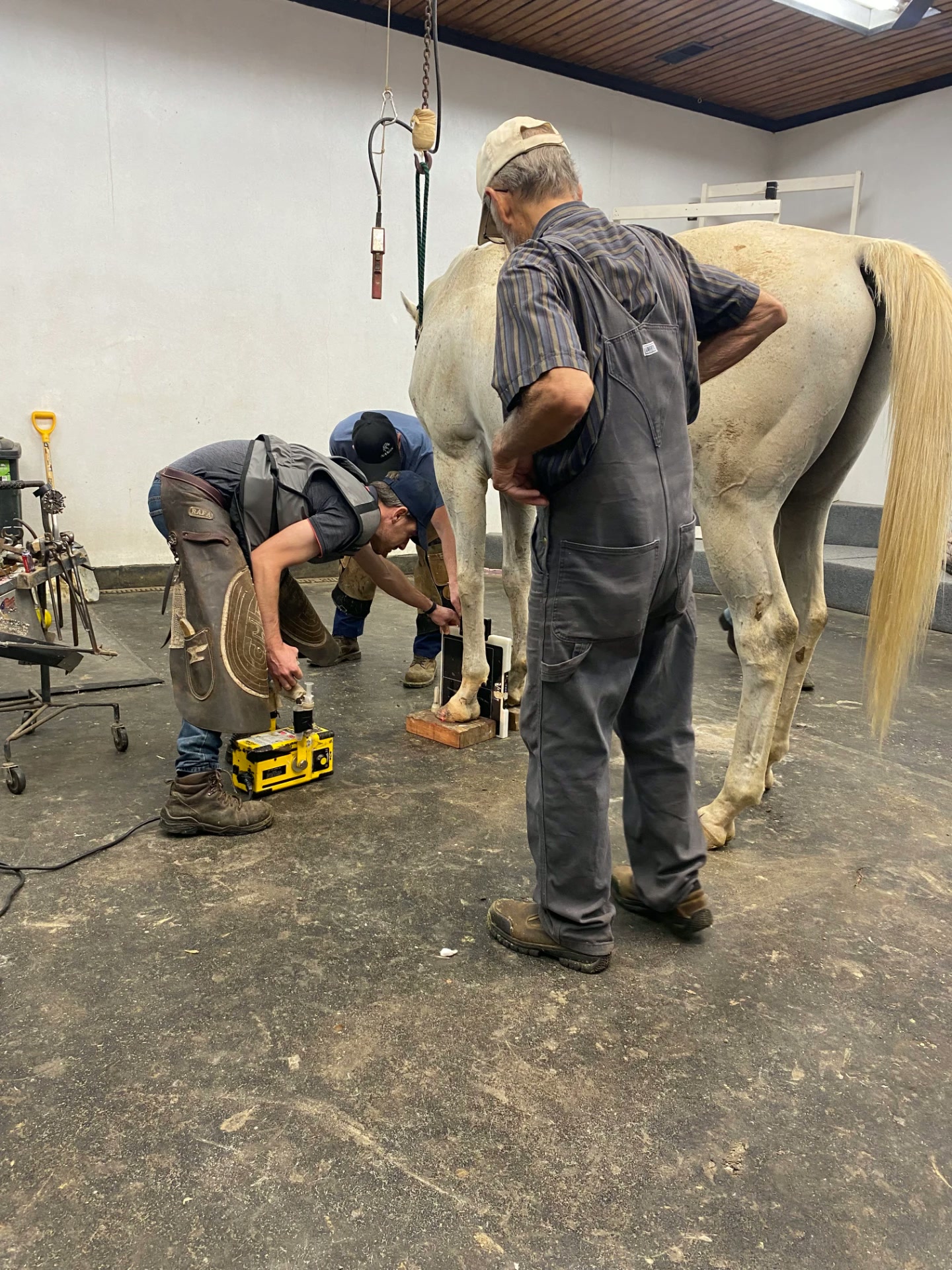
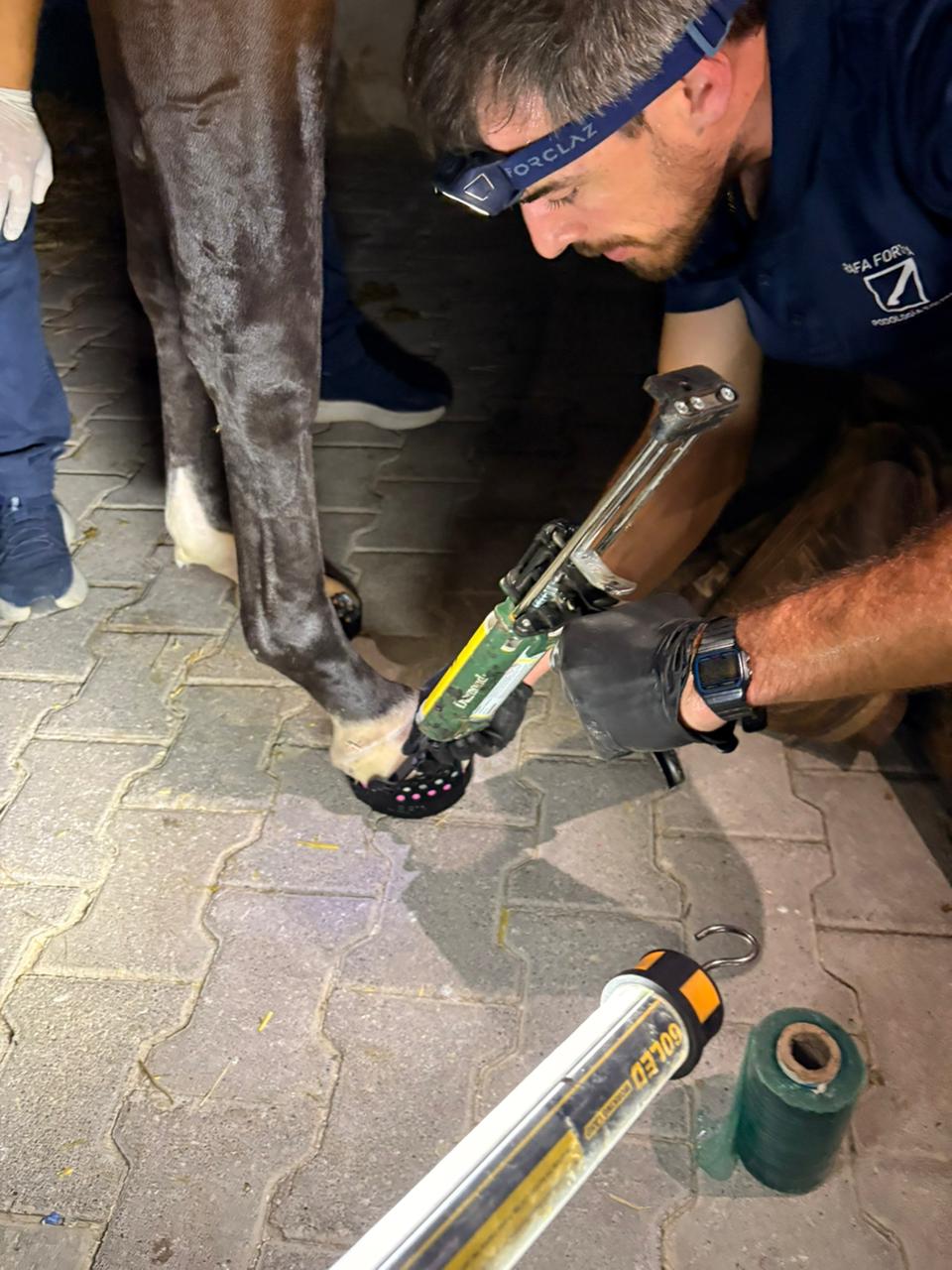
An approach based on anatomy and biomechanics
In equine podiatry we study the hoof as part of a biomechanical system. Foot conformation, limb alignment, load distribution, movement and the relationship between internal and external structures can all influence the horse's health and function.
Assessing each animal individually makes it possible to identify imbalances, asymmetries, deformations and hoof disorders, as well as factors that may contribute to the development or persistence of certain locomotor problems.
When required, the podiatric assessment can be complemented with diagnostic tools such as radiography, which allows us to evaluate the position and relationship of internal structures such as the coffin bone (P3), along with other parameters relevant to establishing a suitable treatment.
Equine podiatry for prevention and treatment
Proper podiatric care can play an important role both in preventing hoof problems and in the treatment and follow-up of different pathologies.
Conditions that may require a specialised approach include:
- Laminitis and its consequences for the hoof.
- Navicular syndrome.
- Imbalances and asymmetries.
- Cracks, fissures and fractures.
- Hoof deformations.
- Weak hooves or irregular hoof growth.
- Disorders related to biomechanics.
- Cases requiring hoof reconstruction or stabilisation.
Every case requires an individual assessment. There is no single solution valid for all horses: treatment must be adapted to hoof morphology, pathology, age, activity level and the particular characteristics of each animal.
Technology applied to equine podiatry
The evolution of equine podiatry is also making it possible to incorporate new tools, materials and manufacturing systems that widen treatment possibilities.
Technical materials, fibreglass, analysis tools and 3D printed manufacturing allow us to develop increasingly personalised solutions for certain cases.
Horseshoes and other support elements can be designed around the specific characteristics of each hoof, adapting the treatment to its biomechanical needs and encouraging a suitable load distribution.
Technology does not replace knowledge of the horse's anatomy and biomechanics; it provides new tools to apply that knowledge with greater precision.
A constantly evolving discipline
Equine podiatry is in continuous evolution. Research into the hoof, biomechanics, materials and different pathologies makes it possible to develop new prevention, treatment and rehabilitation strategies.
Our approach combines knowledge, experience, technology and innovation, seeking individual solutions for every horse, pony or donkey.
Because caring for the hoof does not only mean keeping it in good external condition. It means understanding its function, its relationship with the rest of the locomotor system and its importance for the animal's wellbeing, movement and quality of life.